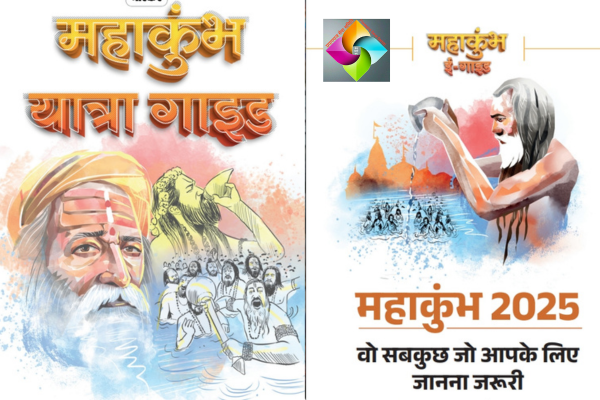
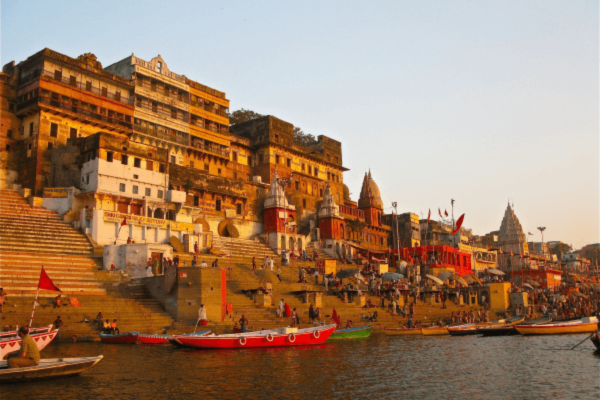
MAHA KUMBH

Vaidik History of Kumbh Festival,

The Kumbh Festival has its roots in ancient Vedic mythology, dating back to the time of the gods. According to legend, the Kumbh Festival commemorates the victory of the gods over the demons in a battle for the nectar of immortality, known as Amrit.

  • The Churning of the Ocean–
    The story begins with the churning of the ocean, known as Samudra Manthan, by the gods and demons. The churning produced several precious objects, including the goddess Lakshmi, the god Dhanvantari with the nectar of immortality, and the god Halahala, who was the embodiment of poison.
  • The Battle for Amrit
    As the gods and demons fought for the nectar of immortality, a few drops spilled onto the earth at four different locations: Prayagraj, Haridwar, Nashik, and Ujjain. These locations became the sites of the Kumbh Festival, which is celebrated every 12 years in each of these cities.
  • Association with Rishis, Gods, and Goddesses —
    The Kumbh Festival is associated with several Rishis, gods, and goddesses, including:
  • 1. Lord Vishnu: The preserver of the universe, who took the form of a tortoise to support the mountain Mandara during the churning of the ocean.
    2. Lord Shiva: The destroyer of the universe, who consumed the poison Halahala to save the world from destruction.
    3. Goddess Ganga: The goddess of the river Ganges, who is worshipped during the Kumbh Festival for her purifying and life-giving properties.
    4. Rishi Agastya: A Vedic sage who played a crucial role in the churning of the ocean and the distribution of the nectar of immortality.
    5. Rishi Durvasa: A Vedic sage who was known for his short temper and his role in the story of the Kumbh Festival.
  • 6. Rishi Bharadwaj Rishi Bharadwaj was a revered Vedic sage and scholar in ancient India. He is one of the most prominent rishis (sages) mentioned in the Vedas and the Puranas. Bharadwaj is credited with being the author of several ancient Indian texts, including the Bharadwaja Samhita and the Vimana Shastra.
  • Early Life and Education of Rishi Bharadwaj —
    According to legend, Rishi Bharadwaj was born in the city of Prayagraj (modern-day Allahabad) in the state of Uttar Pradesh, India. His father was Rishi Brihaspati, the guru of the gods, and his mother was Mamata, the daughter of the sage Utathya.
    Bharadwaj received his education from his father, Brihaspati, and later from the sage Valmiki, who is credited with writing the epic Ramayana. Bharadwaj was an exceptional student and quickly mastered the Vedas, the Upanishads, and other ancient Indian scriptures.
  • Contributions of Rishi Bharadwaj to Ancient Indian Literature —
    Rishi Bharadwaj made significant contributions to ancient Indian literature. Some of his notable works include:
  • 1. Bharadwaja Samhita: A treatise on medicine, surgery, and Ayurveda.
    2. Vimana Shastra: A text on aeronautical science and the construction of flying machines.
    3. Bharadwaja Purana: A Purana that deals with the creation of the universe, the gods, and the duties of humans.
    4. Bharadwaja Smriti: A text on Hindu law and jurisprudence.
  • Association of Rishi Bharadwaj with the Kumbh Festival —
    Rishi Bharadwaj is closely associated with the Kumbh Festival, which is held every 12 years in Prayagraj. According to legend, Bharadwaj was one of the rishis who received a portion of the nectar of immortality, Amrit, during the churning of the ocean. He is said to have bathed in the sacred waters of the Ganges River during the Kumbh Festival, which is believed to have given him spiritual enlightenment and immortality.
  • Legacy of Rishi Baradwaj —
    Rishi Bharadwaj’s legacy is profound and far-reaching. He is revered as one of the greatest sages of ancient India, and his contributions to Hinduism, Ayurveda, and aeronautical science are still studied and respected today. The Bharadwaj Gotra, a Hindu clan, claims descent from Rishi Bharadwaj and is found in many parts of India. In conclusion, Rishi Bharadwaj was a towering figure in ancient Indian history, who made significant contributions to Hinduism, literature, and science. His association with the Kumbh Festival and his legacy as a great sage continue to inspire and influence people to this day.
    🚩🇮🇳
  • Significance of the Kumbh Festival :
    The Kumbh Festival is a celebration of the victory of good over evil, and the attainment of spiritual enlightenment and self-realization. It is a time for spiritual seekers to come together, practice yoga and meditation, and seek the blessings of the gods and goddesses.
  • Conclusion :
    The Vedic history of the Kumbh Festival is a rich and complex tapestry of mythological stories, legends, and symbolism. It is a celebration of the eternal struggle between good and evil, and the quest for spiritual enlightenment and self-realization.
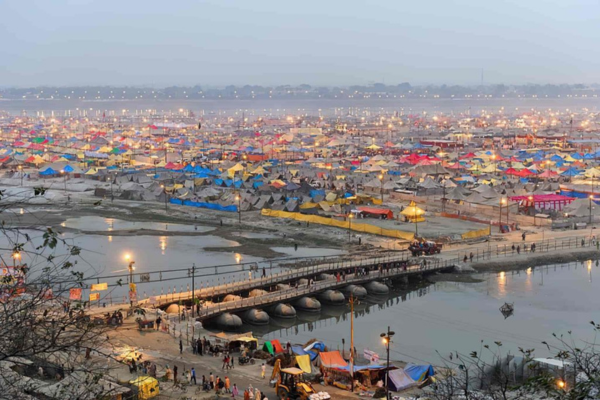
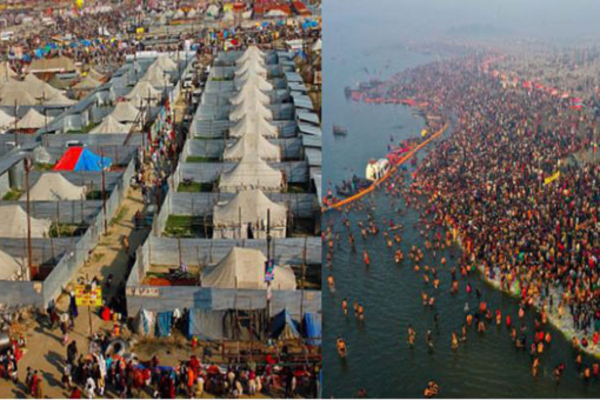
The Maha Kumbh 2025 festival is a grand spiritual gathering held every 12 years in Prayagraj, India. This year’s event will take place from January 13th to February 26th, 2025. The festival is a celebration of spiritual awakening, self-reflection, and devotion, attracting millions of pilgrims from around the world.

  • Important Dates:
    – Paush Purnima: January 13th, 2025, marks the beginning of Kalpwas, a period of intense devotion and meditation ¹.
    – Makar Sankranti (1st Shahi Snan): January 14th, 2025, is the first royal bath, taken by revered sadhus and naga babas ¹.
    – Mauni Amavasya (2nd Shahi Snan): January 29th, 2025, is the day of the Royal Bath, where millions of pilgrims flock to the banks of the sacred river ¹.
    – Basant Panchami: February 3rd, 2025, is the third royal bath ¹.
    – Maghi Purnima (Main Snan): February 12th, 2025, is a significant bathing date ¹.
    – Maha Shivratri: February 26th, 2025, marks the culmination of the Maha Kumbh Mela ¹.
  • Rituals and Ceremonies:
    The Maha Kumbh Mela features various sacred rituals, including the Shahi Snans (Royal Baths), where sadhus and pilgrims take a dip in the holy waters to cleanse their sins ². The Akharas, various sects of sadhus, showcase their skills and knowledge in disciplines like yoga, meditation, and scripture recitation ².
  • Must-See Attractions:
    – The Ganga Aarti: A mesmerizing evening ritual where thousands of lamps illuminate the river Ganges ².
    – The Divine Confluence: Take a boat ride to witness the sacred union of the rivers Ganges, Yamuna, and Saraswati ².
    – The Haat Bazaars: Vibrant marketplaces offering traditional handicrafts, jewelry, fabrics, and street food ².
    – The Kalpvasis: Interact with devotees who spend the entire festival living a life of simplicity and devotion ².
  • The Maha Kumbh 2025 festival is an unforgettable experience that combines spirituality, culture, and devotion. Whether you’re a pilgrim or a curious traveler, this event is sure to leave a lasting impression.


  • Maha Kumbh 2025 :
    Spacious events, main Ashram camps in Mela and impressive rituals at Holi Sangam —
  • The Maha Kumbh 2025 is going to be a spectacular celebration, marking the world’s largest spiritual gathering in Prayagraj, India. This grand event will take place from January 13 to February 26, 2025, and is expected to draw millions of pilgrims and visitors from around the globe ¹.
  • Spacious Events and Main Attractions
  • The Maha Kumbh 2025 will feature a wide range of events and attractions, including:
  • – Shahi Snan (Royal Bath): A ritualistic holy bath in the sacred rivers by various organization heads, including Naga sadhus and other holy men ¹.
     Ganga Aarti: A mesmerizing ceremony where priests perform intricate rituals while holding glowing lamps, offering a visual spectacle ¹.
     Kalpavas: A sacred retreat dedicated to spiritual discipline, austerity, and higher consciousness ¹.
    – Cultural Programs: Traditional music, classical dances, artistic events, and theater productions showcasing India’s rich cultural legacy .
  • Main Ashram Camps in Mela
    The Maha Kumbh 2025 will feature numerous Ashram camps, each offering a unique spiritual experience. Some of the main Ashram camps include:
  • – Juna Akhara: One of the oldest and most revered Akharas, known for its Naga sadhus ¹.
    – Agni Akhara: A prominent Akhara known for its fire rituals and spiritual practices ¹.
    – Nirmal Akhara: A renowned Akhara known for its emphasis on spiritual growth and self-realization ¹.
    – Rashtriy Hindu Sangathan Camp famous for preaching, spreading & conservation of Sanatana Dharma and a great warrior against Hindu discrimination.
    – Prayagraj Seva Samiti camp engaged social enlightenment, upliftment and improvements.
  • Impressive Rituals at Holi Sangam: The Holi Sangam, a sacred confluence of the Ganges, Yamuna, and Saraswati rivers, will be the focal point of the Maha Kumbh 2025 celebrations. Some of the impressive rituals that will take place at Holi Sangam include:
  • – Deep Daan: A ritual where devotees float thousands of lighted earthen lamps on the sacred waters ¹.
    – Shraadh and Veeni Daan: Rituals where devotees offer food and prayers to their ancestors and donate their hair to the Ganges ¹.
    – Sankirtan and Bhajans: Devotional music and singing that will fill the air, creating a spiritually charged atmosphere ².

Maha Kumbh 2025: Your ultimate travel guide for a transformative experience :

This guide covers everything from trip planning to holy rituals and cultural experiences, ensuring you make the most of your Maha Kumbh journey.
Spiritual events and destinations are no longer limited to people in their 60s. Travel trends and data from 2024 reveal a growing interest among Gen Z in spiritual tourism. Whether it’s visiting sacred places like Badrinath, Kedarnath, Ayodhya, and Banaras, or engaging in spiritual practices such as sadhana and meditation camps, young participants are showing a strong inclination towards this journey of self-discovery. Faith-based holidays make up 60 percent of India’s domestic tourism.

With the Maha Kumbh on the horizon (January 13 to February 26), booking sites and organisers are anticipating a significant turnout from Gen Z.
There should be an apparent rise in numbers. We must also not discount the spectacle that the congregation of the sadhus from various Akhadas make, that in itself accounts for the numbers that wish to capture visuals for their Instagram.

The Maha Kumbh 2025 is captivating the younger generation by offering a powerful fusion of spirituality, culture, and extraordinary experiences. Today’s youth are seeking deeper connections—both with themselves and India’s rich traditions. Unlike earlier Kumbhs, this edition resonates with younger audiences through digital engagement, wellness activities like yoga and meditation, and immersive cultural experiences. Beyond the sacred Ganga Snan and Akhara processions, the event offers unique opportunities such as meeting Naga sadhus, participating in yajnas, and exploring ancient Vedic traditions. For many, it’s a transformative journey, blending spiritual awakening with a deep appreciation of India’s heritage.

Unforgettable Memories going to happen in Maha Kumbh Festival:

The Maha Kumbh Mela 2025 is a treasure trove of unforgettable memories. Here are some of the most poignant and enduring experiences:

Spiritual Experiences
1. Shahi Snan (Royal Bath): Witnessing the majestic processions of Akharas, led by Naga sadhus, as they make their way to the Triveni Sangam for a holy dip in the sacred rivers.
2. Holy Dip at Triveni Sangam: Taking a dip at the sacred confluence of the Ganga, Yamuna, and Saraswati rivers, believed to possess immense spiritual energy.
3. Spiritual Discourses: Attending enlightening lectures and discussions by revered spiritual leaders and scholars, delving into topics such as philosophy, theology, and spirituality.

Cultural Experiences
1. Grand Processions: Experiencing the vibrant atmosphere as various Akharas showcase their spiritual traditions and philosophies through elaborate processions, accompanied by drum beats and devotional chants.
2. Cultural Performances: Enjoying a diverse range of cultural performances, including classical and folk music, traditional dances, and theater performances that highlight India’s rich cultural heritage.
3. Traditional Food and Drinks: Savoring traditional Indian cuisine and drinks, such as khichdi, thandai, and jal jeera.

Human Connections
1. Pilgrim Camps: Experiencing the sense of community and unity at the pilgrim camps, where visitors can participate in communal meals, prayer sessions, and cultural activities.
2. Interactions with Sadhus and Saints: Meeting and interacting with revered sadhus and saints, who share their wisdom, knowledge, and experiences.
3. Making New Friends: Forming new connections and friendships with fellow pilgrims and visitors from diverse backgrounds and cultures.

Visual Delights
1. Vibrant Decorations: Witnessing the vibrant decorations, including colorful tents, flags, and banners, that adorn the mela grounds.
2. Intricate Artwork: Marveling at the intricate artwork, including paintings, sculptures, and handicrafts, that showcase India’s rich artistic heritage.
3. Dazzling Fireworks: Enjoying the dazzling fireworks displays that illuminate the night sky, adding to the festive atmosphere.

Personal Reflections
1. Spiritual Awakening: Experiencing a deep sense of spiritual awakening and connection with the divine.
2. Cultural Immersion: Immersing oneself in India’s rich cultural heritage and traditions.
3. Personal Transformation: Undergoing a personal transformation, as the experience of the Maha Kumbh Mela 2025 leaves a lasting impact on one’s life and perspective.